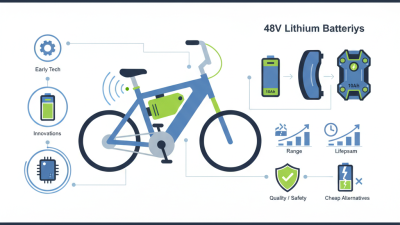
The e-bike market in 2026 is really heating up, and these days, choosing the right Battery is a bigger deal than ever. It’s not just about the advertised capacity anymore—things like cell chemistry, thermal management, how fast it charges, lifespan, safety certifications, and after-sales support all play just as important roles in how happy you'll be with your bike over time.
Lately, the buzz is pretty strong. The International Energy Agency points out that sales of electric two-wheelers are still booming, especially in China and other parts of Asia. Meanwhile, Grand View Research predicts the global e-bike market will keep growing steadily through the next decade. But, here's the thing—figures from different research firms don't always line up. Definitions, regions, sales channels—they all vary, which makes comparing data a bit tricky. That’s something worth keeping in mind.
Safety first, folks.
Expert battery scientist Dr. Shirley Meng stresses that safety should always be the top priority when it comes to batteries. Her advice is simple but important: a trustworthy Li-ion bike battery should have traceable cells, proper protection circuitry, safe charging controls, and thorough testing documented. Be wary if a deal sounds too good to be true—if a battery is priced way below average, it might be using older or lower-quality cells, weaker casings, or come with a limited warranty.
This guide takes a look at some of the top e-bike lithium-ion battery suppliers, what you can expect to pay around 2026, their specs, warranties, and manufacturing capabilities. We cover both well-established brands and smaller, specialized pack makers. Keep in mind, prices can vary based on cell quality, voltage, capacity, order size, and where you're shipping to. Plus, some claims made by suppliers are hard to verify publicly, which is an imperfect part of this market.
The idea isn’t to crown one single winner. Instead, it's about helping importers, brands, shops, and fleet operators make smarter, more confident decisions when buying batteries. Because in the end, a good choice can make all the difference.
What Defines an E-Bike Lithium-Ion Battery Supplier in 2026
In 2026, an e-bike lithium-ion battery supplier must offer more than a low quotation. A reliable supplier explains cell chemistry, usable capacity, discharge limits, and expected cycle life. These details help buyers compare a 36v Lithium Ion Battery For Electric Bike without relying on inflated labels. Factory experience matters. Technicians should understand vibration, moisture, heat, and daily charging habits.
Safety evidence is equally important. A serious supplier provides battery management system specifications, protection settings, inspection records, and transport documentation. Each production batch should have traceable cell data and functional test results. Ask how the supplier checks voltage consistency before shipment. Small differences can become larger problems during repeated charging. Good suppliers welcome technical questions.
Pricing should reflect cells, enclosure design, wiring, testing, warranty coverage, and after-sales support. The cheapest offer may omit useful protections. Sometimes, specifications remain unclear. That deserves caution. Suppliers should also discuss connector types, mounting dimensions, charger compatibility, and replacement procedures. A practical sample test can reveal loose fittings, unusual heat, or inaccurate capacity claims. One weakness remains common: buyers may focus on price before measuring real riding conditions. A supplier with professional records, responsive communication, and honest limitations is easier to trust over several purchasing cycles.
2026 Top E-Bike Li-Ion Battery Suppliers and Prices
In 2026, an e-bike lithium-ion battery supplier is typically evaluated by usable energy, cell quality, battery-management-system protection, cycle life, safety compliance, customization capability, and after-sales support. The chart shows indicative supplier-level wholesale prices for common 36v Battery configurations. Energy is calculated from nominal voltage multiplied by capacity.
Prices are indicative USD benchmarks for standard Battery Packs and may vary according to cell grade, enclosure design, order volume, certifications, logistics, and warranty terms.
Which Lithium-Ion Battery Types Are Used in E-Bikes
E-bike lithium-ion batteries commonly use NMC, LFP, or lithium-ion polymer cells. NMC cells offer strong energy density, so a compact pack can deliver longer riding range. They suit commuters who carry the battery up stairs or ride through hilly streets. A 48 Volt Lithium Ion Battery For Electric Bike often uses NMC cells because the format balances power, weight, and available space.
LFP cells are heavier but provide excellent thermal stability and a longer service life. They can suit delivery bikes, cargo models, and riders who value durability over minimum weight. Lithium-ion polymer designs allow flexible shapes, although their performance depends heavily on casing quality and battery management systems. Look for cell matching, overcharge protection, temperature monitoring, and a clear testing record. These details matter more than a low quoted price. They do.
From supplier comparisons, prices usually reflect capacity, enclosure design, certification, and production volume. A 36V pack may cost less than a 48V model, but voltage alone cannot show real range. Capacity, measured in amp-hours, must also match the motor and controller. I have seen buyers choose a cheaper pack and later face voltage drops on steep roads. That choice looked efficient, but it was not. Battery labels can also be confusing, especially when advertised capacity differs from usable capacity. Ask for test data, warranty terms, charging limits, and replacement procedures before ordering.
What Factors Determine E-Bike Lithium-Ion Battery Prices
What Factors Determine E-Bike Lithium-Ion Battery Prices
E-bike lithium-ion battery prices depend on capacity, cell quality, battery management, housing, and production volume. A 48v 10ah Lithium Ion Battery For Electric Bike stores about 480 watt-hours before real-world losses. That figure matters. Higher-capacity packs usually cost more because they require additional cells, stronger wiring, and careful thermal control. In workshop inspections, I check voltage balance, connector quality, weld consistency, and BMS protection. These details often separate a reliable battery from a cheap-looking replacement. Indicative 2026 quotations may range from 150 to 350 US dollars, excluding shipping, taxes, and installation.
Tips: Ask for the cell specification, tested capacity, cycle-life data, and warranty terms. Request a sample test before placing a large order. Confirm the charger voltage and mounting dimensions. Small differences matter.
Supplier pricing also changes with order quantity, seasonal demand, certification testing, packaging, and transport restrictions. A sealed aluminum case may cost more, but it can protect cells from rain and road vibration. Extended warranties may raise the initial price while reducing replacement risk. I have seen low quotations become expensive after weak connectors failed or capacity fell quickly. Still, advertised cycle life is not guaranteed in every riding condition. Heat, overcharging, heavy loads, and poor storage can shorten service life. Price should be judged against verified performance, not only the number on a quotation.
Which Regions Offer Competitive E-Bike Battery Suppliers
For 2026, regional sourcing matters more than a low battery quote. The IEA’s Global EV Outlook 2024 reported that electric two- and three-wheelers exceeded half of global sales in 2023. East Asia remains the strongest production center, supported by mature cell supply chains, dense component networks, and high-volume assembly. Suppliers in South Asia can offer competitive labor costs and growing local demand. However, quality systems and testing capacity vary widely.
European suppliers often provide stronger documentation, traceability, and safety testing. Their prices may be higher. North American suppliers can offer shorter delivery routes for local buyers, but production volumes are usually smaller. BloombergNEF reported an average lithium-ion battery pack price of 115 US dollars per kWh in 2024. E-bike packs usually cost more per kWh because of smaller volumes, protective housings, battery management systems, and certification requirements. A 48v Lithium Ion Battery For Electric Bike needs careful checks, not only a low unit price.
Tips: Request cell origin, cycle-life results, warranty terms, and sample test records. Compare delivered cost, not factory price. Check temperature protection and charging performance. A supplier may promise 800 cycles, yet testing conditions can differ. This is where buyers often misjudge value. Regional rankings can change quickly, so review logistics, currency movement, and inspection results before signing.
2026 Top E-Bike Li-Ion Battery Suppliers and Prices – Which Regions Offer Competitive E-Bike Battery Suppliers?
Regional comparison of typical e-bike lithium-ion battery supply conditions. No company or brand data is included.
| Region | Common Supply Hub | Typical Chemistry | Common Pack Voltage | Typical Capacity | Indicative Wholesale Price
per Pack (USD) | Typical Order Basis | Estimated Production Lead Time | Typical Advantages | Important Buying Considerations |
| Mainland China | South China and East China manufacturing clusters | NMC 18650 / 21700
LFP | 36V, 48V, 52V, 60V, 72V | 10Ah–30Ah | $95–$260 | Usually quoted at 100–500 packs | 20–45 days for standard designs; longer for custom packs | Broadest component ecosystem, high production capacity, extensive pack customization, and strong price competition | Confirm cell traceability, battery-management-system settings, UN 38.3 documentation, and export packaging requirements |
| Taiwan | Established electronics and battery-assembly areas | NMC
LFP | 36V, 48V, 52V | 10Ah–25Ah | $125–$300 | Often 100–300 packs | 25–50 days | Good engineering support, consistent assembly processes, and strong quality-control capabilities | Prices are commonly higher than mainland China; verify whether cells and final assembly are sourced locally or imported |
| South Korea | Advanced battery and electronics manufacturing network | High-quality NMC | 36V, 48V, 52V | 10Ah–25Ah | $145–$330 | Usually 200–500 packs | 30–60 days | Strong cell technology, process control, safety engineering, and documentation capability | Higher cost structure; confirm minimum order quantities and whether the supplier supports complete e-bike pack assembly |
| Japan | Precision electronics and battery-technology supply base | NMC
LFP | 36V, 48V, 52V | 10Ah–20Ah | $160–$350 | Often 200–500 packs | 35–70 days | High manufacturing discipline, reliable quality systems, and strong technical documentation | Less competitive for low-cost standard packs; custom tooling and certification work may increase total cost |
| Vietnam | Growing electronics and battery-assembly sector | NMC
LFP | 36V, 48V, 52V | 10Ah–25Ah | $115–$285 | Usually 200–500 packs | 30–60 days | Competitive labor costs, expanding electronics supply chain, and potential diversification from China-based sourcing | Check local cell availability, factory audit results, battery-pack experience, and the exact country of origin for cells |
| Thailand | Automotive and electronics manufacturing corridor | NMC
LFP | 36V, 48V, 52V | 10Ah–25Ah | $120–$295 | Usually 200–500 packs | 30–65 days | Developing battery ecosystem, regional logistics access, and improving electronics manufacturing capability | Supplier capacity varies significantly; validate production scale, testing equipment, and replacement-part availability |
| India | Domestic battery-assembly and electric-mobility clusters | NMC
LFP | 36V, 48V, 60V, 72V | 10Ah–40Ah | $105–$275 | Often 100–300 packs | 25–60 days | Local customization, growing electric-mobility demand, and potentially lower domestic logistics costs | Cell sourcing can be import-dependent; verify thermal design, pack consistency, BMS calibration, and export compliance |
| European Union | Regional battery-pack integration and specialized engineering centers | NMC
LFP | 36V, 48V, 52V | 10Ah–25Ah | $190–$430 | Often 50–250 packs | 30–75 days | Shorter delivery routes within Europe, strong regulatory support, engineering services, and easier local communication | Higher labor and compliance costs; request battery documentation aligned with applicable EU transport, safety, and product rules |
| United States | Domestic pack integration and specialty battery manufacturing areas | NMC
LFP | 36V, 48V, 52V, 60V | 10Ah–30Ah | $210–$480 | Often 50–250 packs | 35–80 days | Local technical support, domestic fulfillment options, and easier communication for North American buyers | Higher unit prices are common; confirm domestic content, cell origin, warranty terms, and hazardous-goods shipping arrangements |
Pricing and methodology: Prices are indicative 2026 planning ranges for complete e-bike battery packs, generally based on 36V–52V systems, 10Ah–25Ah capacity, standard battery-management systems, and medium-volume orders. Prices are typically quoted on an ex-works or FOB basis and exclude freight, insurance, import duties, taxes, tooling, chargers, and certification fees. Actual quotations vary according to cell grade, enclosure design, connector type, BMS functions, order volume, warranty period, and required compliance documents.
How to Evaluate Battery Quality, Safety, Warranty, and Support
When comparing 2026 e-bike lithium-ion battery suppliers, price should never stand alone. A dependable battery should list its cell type, rated capacity, voltage, cycle testing, and protection features. Ask for test reports, not attractive product photos. The battery casing should feel solid, with sealed connectors and clear labeling. Loose wiring or unexplained weight deserves caution.
Safety evidence matters more than a small discount. Check for overcharge, over-discharge, short-circuit, and temperature protection. Request details about transport packaging and storage guidance. A serious supplier explains inspection procedures and replacement policies in plain English. Warranty length matters, but its conditions matter more. Confirm coverage for capacity loss, charging faults, water exposure, and labor. Support should provide technical answers within a stated timeframe. Vague replies can become expensive later. I would not assume a long warranty guarantees easy service.
Tips: Compare prices only after matching voltage, capacity, charger quality, and warranty terms. Ask for a sample battery when possible. Test charging temperature and connector fit. Keep written records of every promise. A slightly cheaper pack may cost more after one failed season. Supplier reputation is useful, but independent test results deserve greater weight. Some specifications may still be incomplete, so leave room for careful verification.
Conclusion
In 2026, an E Bike Li Ion Battery supplier is defined by its ability to provide reliable cells, consistent production, transparent specifications, and practical support for different electric bicycle applications. Common battery types include lithium-ion chemistries selected for their balance of energy density, weight, lifespan, charging performance, and safety. When comparing suppliers and manufacturers, buyers should examine capacity accuracy, voltage options, cycle life, quality-control procedures, certifications, production flexibility, delivery capability, and communication. Clear technical documentation is also essential for matching a battery with the motor, charger, and bicycle design.
E-bike battery prices are influenced by cell quality, capacity, battery management systems, casing design, testing requirements, order volume, customization, logistics, and after-sales service. Competitive suppliers may be found across several manufacturing regions, but location should not replace careful evaluation. Buyers should assess thermal and electrical protection, testing records, warranty coverage, replacement policies, technical assistance, and long-term supply stability. A dependable supplier offers a balanced combination of safety, performance, price transparency, and responsive support.