Leave Your Information
0%

As we step into 2026, global buyers have more options for Lifepo4 Battery Packs than ever before. It’s quite the variety these days—think prismatic, cylindrical, and pouch-cell designs. And honestly, each type comes with its own set of pros and cons, especially when you’re considering safety, ease of maintenance, energy density, and manufacturing costs.

According to the International Energy Agency, LFP batteries made up nearly half of the world’s Electric Vehicle Battery market in 2024. They also pointed out that these batteries tend to cost less in terms of materials compared to nickel-based options. BloombergNEF’s 2024 Battery Price Survey puts the average pack price at around $115 per kilowatt-hour, but the LFP packs are generally closer to $81 per kilowatt-hour. That kind of price difference really explains why LFP chemistry is such a hit for things like buses, energy storage solutions, commercial vehicles, and entry-level cars. Of course, these averages don’t tell the whole story—regional pricing, warranties, and how much it costs to integrate them can vary quite a bit.

Dr. Shirley Meng, a well-respected scientist in the battery field, wisely reminds us: “There is no one-size-fits-all battery chemistry.” That’s a crucial point to keep in mind when you’re making a choice in 2026. For example, a smaller cylindrical pack might make replacing batteries easier, while a prismatic pack could give you better structural efficiency. Pouch cells? They’re lighter and can save space, but you’ve got to be pretty careful with protecting them mechanically.

If you’re shopping for batteries professionally, don’t just go by price—make sure to compare usable capacity, cycling life, thermal management, certification history, and the traceability of your suppliers. And don’t forget, real-world experience really counts. Something that looks cheap upfront might need more cooling or frequent check-ups in the long run.

This article takes a closer look at the top Lifepo4 Battery Pack options for global buyers and offers some thoughts on how simple rankings can be misleading—because in real life, performance doesn’t always follow the neat charts we like to see.
2026 Top Lifepo4 Battery Pack Types for Global Buyers

What Is a LiFePO4 Battery Pack?

A LiFePO4 battery pack is more than a group of lithium iron phosphate cells. It combines cells, a battery management system, wiring, fuses, terminals, and protective housing. The BMS monitors voltage, temperature, and current during charging and discharge. It can disconnect the pack when conditions become unsafe. A single cell may provide about 3.2 volts nominally, while several cells connect in series to create a higher-voltage pack.

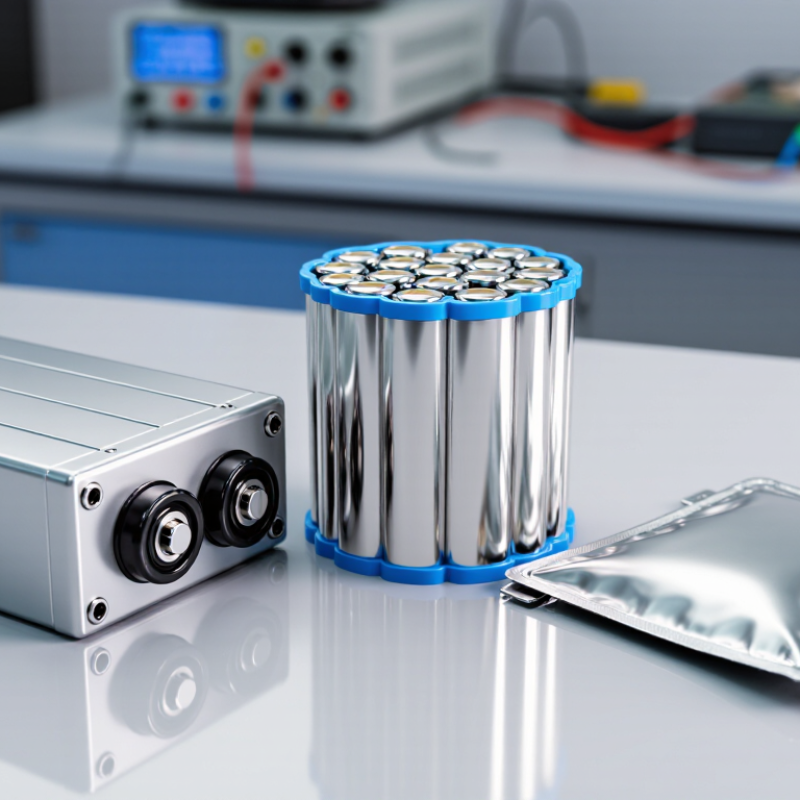
For global buyers in 2026, common pack types include prismatic, cylindrical, pouch, portable, and rack-mounted designs. Prismatic packs usually save space and simplify installation. Cylindrical packs can offer strong mechanical support and flexible sizing. Pouch cells are lightweight, but their enclosure needs careful protection. Rack-mounted packs suit backup power rooms, while portable packs may include handles, screens, and integrated chargers. The right type depends on load, installation space, climate, and service access.

LiFePO4 chemistry is known for thermal stability and long cycle potential. It is also heavier than some higher-energy lithium chemistries. Do not judge a pack by capacity alone. Check usable energy, continuous current, peak current, operating temperature, ingress protection, warranty conditions, and certification documents. A neat specification sheet can still mislead. Real performance changes with heat, cold, charging habits, and installation quality. The BMS settings deserve special attention. A poorly matched charger can reduce reliability, even when the cells are well made.

How LiFePO4 Battery Packs Are Classified

LiFePO4 battery packs are classified by chemistry, voltage, capacity, structure, and application. The cells use lithium iron phosphate cathodes, known for thermal stability and long cycle life. A 12v Lifepo4 Battery usually contains four series-connected cells, creating a nominal voltage near 12.8 volts. Higher-voltage packs use more cell groups in series, such as 24V, 36V, or 48V designs.

Capacity creates another practical class. Small packs below 1 kWh often serve lighting, portable equipment, or backup electronics. Medium packs support marine systems, recreational vehicles, and small solar installations. Larger cabinets can exceed 100 kWh for commercial storage. The International Energy Agency reported that battery storage additions in the power sector reached about 42 GW in 2023. That figure shows why pack classification now matters beyond consumer products.

Pack structure also separates cylindrical, prismatic, and pouch-cell designs. Prismatic packs often simplify enclosure design, while cylindrical cells may offer flexible manufacturing. Integrated battery management systems monitor voltage, temperature, balancing, and overcurrent conditions. Some packs include heating pads for cold climates, but this feature can reduce usable energy during winter operation. Classification is not perfectly consistent across suppliers. A “deep-cycle” label may describe use, not chemistry. Buyers should check continuous current, peak current, operating temperature, enclosure rating, and tested cycle conditions. IEA data also recorded more than 750 GWh of EV battery demand in 2023, reinforcing the industry’s rapid scale and uneven terminology.

2026 Top LiFePO4 Battery Pack Types for Global Buyers — How LiFePO4 Battery Packs Are Classified

LiFePO4 battery packs are commonly classified by nominal voltage, which is determined by the number of 3.2 V cells connected in series. The most widely used configurations include 12.8 V for small power systems, 25.6 V for medium-sized equipment, 51.2 V for energy storage and mobility applications, and 102.4 V for higher-voltage systems. Actual operating voltage varies with the battery’s state of charge and charging conditions.

Key LiFePO4 Battery Pack Types for Global Buyers

Global buyers now face several LiFePO4 battery pack types, not one universal solution. Cylindrical cells suit portable power stations and compact tools. Prismatic cells offer fewer connections and easier maintenance in solar storage. Pouch cells can reduce weight, but they need stronger mechanical protection. In practical installations, thermal spacing and connector quality often matter more than advertised capacity.

The IEA’s Global EV Outlook 2024 reported nearly 14 million electric car sales in 2023. This growth is increasing demand for safer, modular lithium iron phosphate packs. For homes and small businesses, 12V, 24V, and 48V systems remain common. A 24v Lifepo4 Battery can power lighting, communication equipment, small inverters, and mobile workstations. It is compact, but users must match its continuous current with the inverter load.

Stationary storage is expanding quickly. The IEA’s Batteries and Secure Energy Transitions report estimates battery storage must grow from about 85 GW in 2023 to 1,200 GW by 2030 under its net-zero pathway. That favors rack-mounted and wall-mounted packs with battery management systems, cell balancing, and clear fault records. Telecom and backup users may prefer high-cycle 48V modules. RV and marine buyers often value vibration resistance and low-temperature charging control. A specification sheet can hide weak details. Check independent test evidence, UN 38.3 transport testing, IEC 62619 alignment, warranty conditions, and replacement procedures. I still find advertised cycle life difficult to compare fairly.

Choosing Capacity, Voltage, and Form Factor

For global buyers in 2026, choosing a LiFePO4 battery pack starts with the application, not the advertised capacity. A 100Ah pack does not suit every load. Calculate energy in watt-hours by multiplying voltage by amp-hours. A 48v Lifepo4 Battery rated at 100Ah stores about 4,800Wh before practical losses. Allow extra capacity for cold weather, aging, and inverter inefficiency. Real installations rarely perform like laboratory tests.

Voltage should match the system’s inverter, charger, and wiring design. Twelve-volt packs suit small mobile systems and compact backup equipment. Twenty-four-volt systems reduce current in medium-sized installations. Higher-voltage packs can improve efficiency for larger loads, but they demand careful battery management and compatible protection devices. Check continuous and peak current ratings, not capacity alone. A battery may hold enough energy yet fail during motor startup.

Form factor affects installation more than many buyers expect. Measure the enclosure, terminal clearance, cable route, and mounting surface before ordering. Rack-style packs work well in organized energy rooms, while compact cases fit mobile or space-limited equipment. Weight matters during handling. I have seen buyers focus on watt-hours and overlook ventilation, service access, or connector orientation. That mistake is expensive to correct. Recheck the datasheet, because advertised dimensions sometimes exclude terminals and handles. Reliable selection requires comparing tested cycle data, operating temperature, warranty terms, and local compliance documents.

Safety, Performance, and Lifecycle Considerations

Choosing the right Battery Lifepo4 pack requires more than comparing capacity and price. Common formats include prismatic, cylindrical, and pouch cells. Prismatic packs often simplify installation, while cylindrical designs can support flexible layouts. Pouch cells save space but require careful compression and protection.

Safety starts with cell consistency and a reliable battery management system. The BMS should monitor voltage, current, temperature, and balancing status. LiFePO4 chemistry is generally more thermally stable than many lithium alternatives, but it is not risk-free. Poor wiring, damaged insulation, or unapproved chargers can still create dangerous failures. Inspect terminals closely. Look for clean connections, firm busbars, and sealed enclosures. A loose connector may heat like a small hand warmer during heavy discharge.

Performance changes with conditions. Cold charging can damage cells, especially below the manufacturer’s permitted temperature range. High discharge rates may reduce usable capacity and increase heat. Buyers should check continuous power, peak power, voltage tolerance, and communication compatibility. A pack that performs well in a warm test room may disappoint inside a cold delivery vehicle.

Lifecycle value depends on depth of discharge, storage temperature, charging habits, and mechanical stress. A high cycle rating is not a promise under every workload. Real use is messier. Some specifications also omit capacity fade after repeated fast charging. Request test conditions, warranty terms, and maintenance guidance before purchase. Then compare results under the temperatures and daily loads the application will actually face.

Global Standards, Shipping, and Supplier Evaluation

2026 Top LiFePO4 Battery Pack Types for Global Buyers

Global Standards, Shipping, and Supplier Evaluation

LiFePO4 battery packs now serve forklifts, backup systems, marine equipment, and solar storage. Common designs include cylindrical, prismatic, and pouch-cell packs. Prismatic packs offer compact assembly, while cylindrical cells can simplify thermal control. Pouch cells save weight but need stronger protection against swelling and compression. Selection should match voltage, capacity, peak current, temperature range, and installation space. Bigger capacity is not always better.

For global shipments, request UN 38.3 test documentation, a safety data sheet, and clear battery labeling. Industrial packs may also require IEC 62619 testing, while some applications need additional regional certification. Confirm whether the shipment travels by air, sea, or road. Packaging, state-of-charge limits, terminals, and dangerous-goods declarations can change by route. Customs delays often begin with inconsistent product names or missing test summaries. A certificate alone is not proof of manufacturing quality. It deserves verification.

Tips: Ask suppliers for cell traceability, production dates, protection-board specifications, and sample test records. Check cycle-life results under stated temperature and discharge conditions. Compare real usable energy, not only the printed capacity. Request photographs of insulation, busbars, fuses, and enclosure seals. A remote factory tour helps, but it cannot replace an independent inspection. We also recommend a small pilot order before committing to volume. Supplier claims can be accurate, incomplete, or simply optimistic. Track voltage consistency, capacity retention, and shipping damage during evaluation.

2026 Top LiFePO4 Battery Pack Types for Global Buyers - Global Standards, Shipping, and Supplier Evaluation

Battery Pack Type Typical Nominal Voltage Typical Capacity Range Common Configuration Typical Applications Key Technical Advantages Important Design Checks Relevant Global Requirements Shipping Considerations Supplier Evaluation Priorities
12.8 V Portable and Small Solar Pack 12.8 V nominal; 14.6 V typical maximum charging voltage 20–200 Ah 4 LiFePO4 cells in series, commonly written as 4S Portable power systems, small solar storage, lighting, communication equipment, backup power Compact system voltage, good cycle life, stable thermal behavior, easy replacement of lead-acid systems Low-temperature charging protection, continuous current rating, enclosure protection, battery-management-system cutoff settings UN 38.3 transport testing; IEC 62619 or IEC 62133-2 may apply according to product use and market; EMC and electrical safety rules may also apply Usually classified as lithium-ion batteries; confirm UN 3480 or UN 3481 classification, packaging, labels, documentation, and carrier restrictions Verify cell traceability, BMS test records, rated capacity at a stated test condition, and low-temperature charging control
12.8 V RV, Marine, and Recreational Pack 12.8 V nominal; 14.6 V typical maximum charging voltage 50–400 Ah 4S cell arrangement; parallel strings may be used for higher capacity Recreational vehicles, boats, trolling motors, auxiliary vehicle power, off-grid cabins High usable energy, lower weight than equivalent lead-acid systems, low self-discharge, strong deep-cycle performance Ingress protection, vibration resistance, fuse or breaker coordination, alternator compatibility, cold-weather operation UN 38.3 is required for transport; marine, vehicle, EMC, and installation requirements depend on the destination market and application Protect terminals against short circuits; use strong inner packaging; check whether the battery is installed in equipment or shipped separately Assess vibration testing, salt-mist or corrosion protection where relevant, BMS communication, warranty terms, and serviceability
25.6 V Industrial and Telecom Pack 25.6 V nominal; 29.2 V typical maximum charging voltage 50–400 Ah 8S LiFePO4 cells; parallel strings are used for additional energy Telecommunication backup, security systems, industrial controls, small UPS systems, mobile equipment Higher DC voltage reduces current for the same power, improving cable and connection efficiency Rack compatibility, remote monitoring, battery synchronization, short-circuit protection, thermal management, and connector ratings UN 38.3; IEC 62619 is commonly relevant for industrial stationary batteries; installation may require local electrical and fire-safety compliance Confirm whether the shipment is a standalone battery or part of equipment; obtain current transport test summaries and safety data Check communication protocols, operating-temperature range, failure logs, production end-of-line testing, and replacement-part availability
48 V / 51.2 V Rack-Mount Energy Storage Pack 51.2 V nominal; 58.4 V typical maximum charging voltage 50–280 Ah; approximately 2.5–14.3 kWh per module 16S cells, commonly integrated in a 19-inch rack-compatible enclosure Residential storage, small commercial storage, data and telecom backup, off-grid systems Modular expansion, lower installation current than 12 V systems, integrated monitoring, and compatibility with many DC buses Parallel-module limits, inverter communication, pre-charge design, rack ventilation, protection coordination, and state-of-charge calibration UN 38.3; IEC 62619; UL 1973 may be requested for stationary battery systems; system-level certification may involve UL 9540 and fire testing such as UL 9540A Use approved packaging and terminal protection; confirm palletization, dangerous-goods declaration, sea-freight requirements, and local import rules Request parallel-operation test results, inverter compatibility list, thermal-propagation strategy, firmware-control process, and field-replaceable design
High-Voltage Residential and Commercial ESS Pack 102.4–614.4 V nominal, depending on series modules 5–100 kWh per cabinet or system segment Multiple 16S modules connected in series; system voltage must match the inverter and protection architecture Residential solar storage, commercial peak shaving, microgrids, renewable-energy integration Efficient power transmission, scalable energy capacity, reduced DC current, and centralized system monitoring High-voltage interlock, insulation monitoring, contactors, pre-charge circuit, arc-flash risk, service disconnects, and thermal-event containment UN 38.3; IEC 62619; UL 1973, UL 9540, UL 9540A, IEC 62477-1, or regional equivalents may be required according to the system and market Transport may require disassembled modules, specialized packaging, dangerous-goods documentation, and carrier approval; verify applicable mode-specific rules Prioritize system certification scope, thermal-runaway test evidence, cybersecurity and firmware controls, remote diagnostics, and installer documentation
48 V / 51.2 V Motive and Low-Speed Vehicle Pack 48–51.2 V nominal; charging voltage depends on the 16S configuration 100–1,000 Ah 16S configuration; parallel strings and high-current busbars may be used Golf and utility vehicles, electric carts, floor-cleaning machines, material-handling equipment, and small electric vehicles High usable energy, regenerative-braking compatibility when correctly engineered, low routine maintenance, and stable discharge performance Peak current, acceleration demand, regenerative current, vibration, enclosure rating, emergency isolation, and charger compatibility UN 38.3; vehicle or machinery regulations, EMC requirements, and functional-safety requirements may apply according to vehicle category and jurisdiction Secure the pack against movement; protect high-current terminals; verify whether it is shipped as a battery alone or installed in equipment Evaluate pulse-current test data, vibration and shock results, CAN or other communication support, service procedures, and abuse-test documentation
Supplier Evaluation Checkpoint Electrical specification consistency Capacity, energy, current, and test conditions clearly stated Cell configuration, cell grade, BMS topology, and module-parallel limits documented Application-specific validation rather than generic catalog claims Independent test reports, repeatable production quality, and defined end-of-life criteria Check charge and discharge limits, temperature limits, ingress protection, balancing method, and protective cutoffs Request test reports, certificates, declarations, safety data, and the exact model or configuration covered by each document Confirm dangerous-goods classification, current UN 38.3 test summary, package dimensions, gross weight, and transport mode restrictions Review audit results, quality-control plan, traceability, warranty exclusions, failure-return process, lead time, and after-sales support
Buyer Note: Ratings and certification requirements vary by cell design, pack configuration, end use, destination country, and transport mode. Confirm the current requirements with the competent authority, carrier, testing laboratory, and importer before placing an order. Lithium-ion batteries shipped separately are commonly identified as UN 3480, while batteries packed with or contained in equipment are commonly identified as UN 3481. Air shipments may have additional state, operator, packaging, and state-of-charge restrictions.

FAQS

What is a LiFePO4 battery pack?

It uses lithium iron phosphate cells as the cathode material. These cells offer strong thermal stability and long cycle life. They are not risk-free.

How are LiFePO4 packs classified by voltage?

Packs are grouped by nominal voltage, such as 12V, 24V, 36V, or 48V. A typical 12V pack uses four cells in series. Its nominal voltage is about 12.8V.

How does capacity affect battery pack use?

Packs below 1 kWh often support lights, portable tools, or backup electronics. Medium packs suit marine systems, recreational vehicles, and small solar installations. Large cabinets can exceed 100 kWh.

What cell structures are commonly used?

Common designs include prismatic, cylindrical, and pouch cells. Prismatic cells can simplify enclosure design. Cylindrical cells allow flexible layouts. Pouch cells save space but need careful compression.

What should a battery management system monitor?

A reliable BMS monitors voltage, current, temperature, and cell balancing. It should also respond to overcurrent conditions. Without proper monitoring, small wiring faults can become serious.

Can cold weather affect LiFePO4 battery performance?

Yes. Cold temperatures can reduce usable capacity and restrict charging. Charging below the permitted temperature may damage cells. Heating pads help, but they consume some stored energy.

Which specifications should buyers compare?

Check continuous current, peak current, operating temperature, enclosure rating, and voltage tolerance. Also review communication compatibility and charger requirements. Price alone is a weak guide.

Does a high cycle rating guarantee long service life?

No. Cycle ratings depend on depth of discharge, temperature, charging speed, and mechanical stress. A laboratory rating may not match daily use. Real conditions are messier.

How can users inspect a pack before installation?

Examine terminals, insulation, busbars, and enclosure seals. Connections should look clean and feel firm. A loose connector can become hot during heavy discharge. Check twice.

Why can battery labels be confusing?

Terms such as “deep-cycle” may describe intended use rather than chemistry. Supplier classifications are not perfectly consistent. Ask for test conditions, warranty terms, and maintenance guidance before purchasing.

Conclusion

A Lifepo4 Battery Pack is a rechargeable energy storage system built with lithium iron phosphate cells, a battery management system, protective housing, and related electrical connections. This article explains how these packs are classified by chemistry, cell arrangement, voltage, capacity, enclosure, and intended application. It introduces common types for global buyers, including portable packs, rack-mounted systems, wall-mounted units, vehicle power packs, and larger modular storage solutions. Readers will also learn how to match capacity, voltage, and form factor with actual energy demands, available installation space, charging equipment, and expansion plans.

The guide further examines safety, thermal stability, usable cycle life, charging performance, maintenance needs, and operating conditions. It also highlights the importance of reviewing transport documentation, product testing records, labeling, packaging, and applicable international standards before purchasing. Finally, buyers are encouraged to evaluate suppliers through technical specifications, quality controls, warranty terms, communication, customization capabilities, and after-sales support, helping them select a reliable Lifepo4 Battery Pack for long-term and responsible use.

Ethan

Ethan

Ethan is a dedicated marketing professional at Guangdong Huishi New Energy Technology Co., Ltd., where he plays a pivotal role in promoting the company’s innovative solutions. With a profound expertise in renewable energy products, Ethan is well-versed in the technical aspects and benefits of the......
Previous How to Choose the Best Reention Battery in 2026?