Leave Your Information
0%

Picking the right 12v Battery isn’t just about looking at the biggest number on the label — it really starts with understanding what you need it to do. For example, a battery in a camper van might have to handle some rough vibrations, irregular charging, and chilly mornings. Meanwhile, a backup battery might sit unused for ages, then suddenly need to kick in with steady power. These are the kinds of differences that actually matter. Before you start comparing models, take a moment to estimate how much energy you'll use daily, what's your peak current, and how long you want the battery to last. Also, make sure to check the voltage and charging requirements of your gear — even small mismatches can mess with performance or shorten your battery’s lifespan.

Now, the chemistry really influences your choice. Lead-acid batteries are often cheaper upfront, but lithium ones tend to be lighter and deliver more usable capacity. For instance, a [12v 100ah Lithium Battery](https://www.pyrbattery.com/12v-100ah-lithium-battery) might be perfect for off-grid setups, but keep in mind that actual runtime depends on a lot of things—load, temperature, inverter losses, and what the manufacturer states. Don’t just go by the headline capacity; read the datasheet! It’s also smart to compare cycle life tests, battery management features, how they charge, terminal types, size, warranty, and support. And ask yourself, does the rated capacity really match what you need on a daily basis? Sometimes, it doesn’t — so don’t assume.

Making a shortlist helps a lot. Measure your available space and double-check if your cables reach. Think about how you'll install it — ventilation might be needed, and you should look at your current charger compatibility too. If details aren’t clear, don’t hesitate to ask the manufacturer. Remember, there’s no perfect battery out there. Even the best calculations can miss sudden starting amps, or a week of gloomy weather. So leave a little wiggle room, and once you start using it, keep an eye on the actual performance. This practical check can really tell you whether your battery is a good fit for your routine — or if it just looked good on paper.

12 Tips for Choosing the Best 12V Battery

Identify the Device’s Voltage and Power Requirements

Before choosing a 12V battery, check the device label or manual for its required voltage and acceptable input range. A “12V” rating may describe nominal voltage, not the battery’s voltage when fully charged. For example, some lithium-ion packs rise above 12V after charging. Confirm that the device can safely handle that range. Small details matter.

Tip: Read the power adapter label, too. It often lists voltage and current, such as 12V and 2A. If the device draws more current than the battery can provide, it may shut down or overheat. For equipment with motors, pumps, or bright lights, startup current can briefly exceed normal demand. Check the device specifications rather than guessing from its size. It is easy to focus on runtime and miss this detail.

A 12v 18650 Battery Pack can vary in its cell arrangement, capacity, and built-in protection. Check its output voltage, continuous current rating, connector, and polarity against the device requirements. A matching plug does not guarantee electrical compatibility. If the manual gives only watts, divide watts by volts to estimate current; a 24W device at 12V needs about 2A. Leave a little headroom. Specs can be incomplete, so verify uncertain ratings with the device maker or a qualified technician.

Choose the Battery Chemistry for Your Application

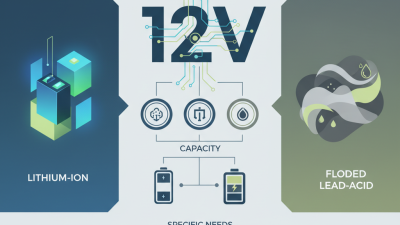
A 12v Battery should match the job, not just fit the tray. Lead-acid options, including flooded and AGM types, are widely used and can suit vehicles or backup systems. Flooded batteries need ventilation and periodic checks. AGM models are sealed during normal use, but still require correct charging. Lithium iron phosphate batteries are lighter and often provide more usable capacity per charge. They may be a poor choice if the charger is incompatible or charging happens below the battery’s permitted temperature. Chemistry matters.

Tip: Write down the device’s voltage range, peak current, daily energy use, and expected runtime. A trolling motor, alarm system, and camper setup place different demands on a battery. Check the manufacturer’s specifications for both the battery and charger; matching “12V” labels alone does not guarantee compatibility. Small detail, big difference.

Compare usable capacity rather than relying only on amp-hour figures. Battery chemistry and recommended discharge limits affect how much energy is available in practice. Also consider storage temperature, maintenance, cycle frequency, and replacement cost. I have seen a lighter option look ideal on paper, then prove awkward because the existing charging system needed changes. Tip: Before buying, confirm dimensions, terminal layout, and whether the battery’s management system supports your load. Leave a little runtime margin; real conditions are rarely tidy.

12 Tips for Choosing the Best 12V Battery — Choose the Battery Chemistry for Your Application

Compare indicative cycle-life ranges for common 12V battery chemistries. The figures are approximate; actual life depends on depth of discharge, temperature, charging, and product design.

Choosing a chemistry: Lead-acid and AGM can suit budget-conscious or standby uses; LiFePO₄ is often chosen for frequent cycling and lower weight; NMC and NiMH may fit applications with specific size or energy requirements. Check the battery’s specifications and ensure its voltage and charging profile match your equipment.

Compare Capacity, Current Output, and Runtime

A 12V battery’s capacity, current output, and runtime describe different things. Capacity, measured in amp-hours, indicates stored charge. A 100Ah battery has about 1,200 watt-hours at a nominal 12 volts, before losses. That figure is a starting point, not a promise. Actual usable energy depends on battery chemistry, temperature, age, and discharge limits.

Check the label. Then match its continuous current rating to the equipment’s draw. A 600-watt device on a 12V system may require roughly 50 amps, and an inverter can draw more because it loses energy. Motors and pumps may also need a brief surge at startup. Numbers can mislead. Leave a margin instead of choosing a battery that only meets the load on paper.

To estimate runtime, divide usable watt-hours by the device’s average wattage. For example, a 12v Battery For Solar Panel rated at 100Ah might provide around 600 usable watt-hours if its chemistry and settings allow 50 percent discharge. A steady 60-watt load could then run for about ten hours, before inverter and wiring losses. Real use is less tidy: clouds reduce solar charging, while cold mornings can affect performance. It is tempting to trust one runtime estimate; measuring the actual load over a day gives a more dependable comparison.

Check Battery Size, Weight, and Terminal Compatibility

A 12V battery can fit the tray and still be the wrong choice. Check the vehicle manual for its approved group size, case dimensions, and terminal layout. Battery Council International’s group-size reference lists a Group 24 case at about 10.25 × 6.81 × 8.88 inches. Measure the tray yourself, including hold-down space and cable reach. A tape measure beats a guess. Leave room above the terminals; a closed hood must not press against them.

Weight matters, too. A heavier battery can strain a tray or hold-down that was designed for a lighter unit, while a lighter replacement still needs secure mounting. Compare the battery’s listed weight with the original, and check that the tray has no corrosion or looseness. I would recheck the measurements, even when the old battery seems to fit. That extra check is easy to skip.

Terminal position and type are not interchangeable details. Confirm positive and negative posts match the cable locations, then check post shape and clamp fit before installation. Cables should reach without stretching, crossing, or rubbing sharp edges. Battery Council International’s National Recycling Rate Study reports a 99% recycling rate for lead batteries; battery construction can vary, so weight alone does not identify chemistry or compatibility. Specs can be confusing. Verify the exact replacement against the vehicle’s requirements, especially when the original battery label is faded or missing.

Match the Battery to Its Operating Environment

A 12V battery should suit the conditions where it will actually operate, not just the equipment’s voltage requirement. Measure the available space, including room for cables and safe access during maintenance. Cold mornings can reduce available capacity, so equipment used outdoors may need more reserve than the same load indoors. Heat matters too. High temperatures can shorten battery life, especially when charging settings do not match the battery chemistry.

Consider vibration, moisture, dust, and airflow around the installation. A battery on a vibrating vehicle needs secure mounting and terminals that cannot loosen easily. Damp areas call for protected connections and an enclosure suited to the exposure; “sealed” does not automatically mean waterproof. Charging batteries need appropriate ventilation and clearance. Check the manufacturer’s temperature and charging limits before choosing a location.

Think about the real duty cycle. A backup battery that sits idle has different needs from one repeatedly discharged by a pump or mobility device. I’ve seen small placement details become large hassles—like a handle blocked by a shelf, or terminals pressed against a wall. It is easy to overlook those. If conditions vary seasonally, allow for the harshest normal operating period, and verify the required capacity against the expected load and runtime.

Evaluate Lifespan, Charging Needs, and Maintenance

A 12V battery’s advertised lifespan is only a starting point. Chemistry, temperature, discharge depth, and charging habits all affect service life. Lead-acid batteries often need more frequent checks; sealed AGM types reduce routine watering, while lithium batteries require compatible charging controls. Check the maker’s cycle-life rating and the conditions behind it. A figure measured with shallow discharges may not reflect daily deep use.

Charging compatibility matters. A charger designed for lead-acid may not suit a lithium 12v Battery Pack, and the wrong profile can shorten battery life. Compare the required charging voltage with your charger’s output, and check whether temperature compensation is needed. SAE J537 testing includes cold-cranking and reserve-capacity measures, useful when matching a battery to vehicle starting or accessory loads. Small label details matter.

Maintenance is less glamorous. Keep terminals clean, secure, and free of corrosion; recharge promptly after heavy use. For flooded lead-acid batteries, check electrolyte levels as directed, and avoid overfilling. Battery Council International reports that about 99% of lead batteries are recycled in the United States, underscoring the value of proper end-of-life handling. That does not mean every battery lasts equally long. A reflective check: do you need low upkeep, or the lowest initial cost? The answer can change the best choice.

Compare Safety Features, Warranty, and Total Cost

A low sticker price can hide weak protection. Check the battery’s chemistry, case design, terminal guards, and published test documentation for your intended use. For a vehicle battery, match its cold-cranking and reserve-capacity ratings to the vehicle’s requirements; for lithium batteries, confirm that the protection system covers overcharge, overheating, and short circuits. A safety label is useful, but it is not a substitute for test details. I’d be cautious here.

Read warranty terms line by line. Compare the full-replacement period with any later prorated coverage, and check exclusions for deep discharge, improper charging, or commercial use. A long warranty may look reassuring, but it can have little value if routine failures are excluded. Keep the dated receipt and installation record. Easy to overlook.

Compare total cost over expected service life, not just purchase price. Include installation, compatible charging equipment, downtime, and end-of-life handling. The Battery Council International’s National Recycling Rate Study reports that about 99% of lead batteries in the United States are recycled. That supports responsible disposal, but recycling does not make a poor-fit battery economical. Estimate cost per usable year, then revisit the estimate if your climate or daily driving differs from the assumptions. I still find this part easy to underestimate.

12 Tips for Choosing the Best 12V Battery - Compare Safety Features, Warranty, and Total Cost

Tip What to Compare Useful Check or Benchmark Safety, Warranty, or Cost Consideration
1. Match the battery chemistry to the job Flooded lead-acid, AGM, or lithium iron phosphate (LiFePO₄) Starting batteries are designed for short, high-current bursts; deep-cycle batteries are designed for repeated discharge. Confirm the battery type is approved for the vehicle or equipment. LiFePO₄ generally requires compatible charging controls.
2. Check charging-system compatibility Charger profile, alternator settings, and any battery-management requirements Use charging limits specified for the exact battery chemistry and model. An unsuitable charging profile can shorten battery life or create a safety risk. Check the equipment and battery manuals before purchase.
3. Compare usable capacity Amp-hour (Ah) rating and the conditions used to measure it Estimate energy needs from load in watts × hours; divide watt-hours by 12 to get an approximate 12V Ah requirement, before system losses. Rated capacity is not always fully usable. Lead-acid batteries generally deliver less service life when repeatedly discharged deeply.
4. Verify starting power when needed Cold-cranking amps (CCA) for engine-starting applications Meet or exceed the vehicle or engine manufacturer’s CCA requirement. CCA is measured at 0°F (−18°C) for 30 seconds while maintaining at least 7.2V for a 12V battery. Do not use an Ah rating as a substitute for the required CCA specification.
5. Check reserve capacity for sustained loads Reserve capacity (RC), usually stated in minutes RC indicates how long a fully charged battery can deliver 25A at 80°F (27°C) before reaching 10.5V. Useful for comparing batteries in applications with continuous electrical loads; compare ratings measured under the same standard.
6. Confirm size and terminal layout Group size, length, width, height, terminal type, and polarity Measure the battery tray and cable reach; confirm the positive and negative terminals match the installation. A loose fit or stretched cable can cause movement, damaged connections, or short circuits. Secure the battery as directed by the equipment maker.
7. Compare built-in safety provisions Overcharge, over-discharge, overcurrent, and temperature protection; case and vent design For lithium batteries, check whether a battery-management system (BMS) is included and what protections it provides. Lead-acid batteries can release explosive hydrogen during charging; provide ventilation and keep sparks and flames away. Follow the manufacturer’s handling instructions.
8. Check the operating-temperature range Permitted charging and discharging temperatures Temperature limits differ by chemistry and model; use the published limits rather than assuming all 12V batteries behave alike. Some LiFePO₄ batteries prohibit charging below freezing unless they have appropriate low-temperature protection. Extreme heat can reduce battery life.
9. Estimate service life realistically Cycle-life rating, depth of discharge, temperature, and usage pattern Cycle-life figures are meaningful only when the test conditions are stated; deeper discharges and higher temperatures can reduce life. Treat advertised cycle counts as test results, not guaranteed years of service. Compare like-for-like depth-of-discharge ratings.
10. Read the warranty terms Coverage period, free-replacement period, prorated terms, and exclusions Check the written warranty for proof-of-purchase rules, approved uses, return shipping, and required maintenance. A longer stated warranty does not always mean a free replacement for the entire period. Compare the remedy and claim process, not just the number of years.
11. Compare total cost of ownership Purchase price, charger or installation costs, maintenance, replacement frequency, and disposal fees A simple comparison is total expected cost ÷ expected years of service. For cycle-based use, compare purchase cost ÷ expected usable cycles. Use your own quotes and realistic service-life assumptions. Include compatible charging equipment if a battery change requires it.
12. Plan for maintenance and recycling Watering needs, terminal cleaning, storage instructions, and end-of-life disposal Flooded batteries may require electrolyte-level checks; sealed AGM and lithium batteries do not require routine water topping-up. Lead-acid batteries are widely accepted through battery-recycling programs. Do not place batteries in household trash; check local rules for lithium-battery collection.

Note: Specifications, warranty terms, prices, and service life vary by model, seller, and operating conditions. Verify current documentation and local requirements before buying.

Powering Your Ride: Choosing a 36V High-Capacity Tiger Shack Battery

A 36V high-capacity battery can make a meaningful difference to everyday riding, especially when longer routes and fewer charging stops are priorities. With a range of up to 160 km on a single charge under suitable conditions, it offers the freedom to explore farther or handle extended commutes with confidence. Its lightweight yet robust construction balances portability with substantial capacity, making it practical to use on a variety of rides.

Built with quality battery cells, the pack is designed to deliver dependable performance over more than 500 charge cycles, retaining over 70% of its capacity after extensive use. An integrated battery management system helps monitor operation and provides continuous protection, while the automatic charger makes recharging simple. Convenient extras add value on the road: a USB port can power compatible devices, built-in LED lights improve visibility at night, and an automatic lock system adds everyday security. Together, these features create a capable, user-friendly power source for riders seeking reliable range and practical convenience.

FAQS

Does a 12V label guarantee a battery is compatible?

Not always. It may describe nominal voltage, while a fully charged battery can provide more. Check the device’s acceptable input range.

How can I check whether the battery can supply enough current?

Compare its continuous current rating with the device’s needs. Motors, pumps, and bright lights may draw extra current at startup.

How do I estimate current if the device lists only watts?

Divide watts by volts. A 24W device at 12V needs about 2A. Leave some headroom.

Is a matching connector enough to confirm compatibility?

No. Check voltage, current rating, connector type, and polarity. A plug can fit while polarity is wrong.

What operating conditions can affect battery performance?

Cold can reduce available capacity, while heat can shorten battery life. Check the battery’s temperature and charging limits.

What should I consider when installing a battery outdoors or in a vehicle?

Allow space for cables and maintenance. Secure it against vibration, and protect connections from moisture and dust. “Sealed” does not always mean waterproof.

How much battery capacity should I plan for?

Consider the load, expected runtime, and duty cycle. A frequently used pump needs different planning from an idle backup battery.

Do charging batteries need ventilation and clearance?

Yes. Follow the battery’s charging limits and leave suitable space around it. Small placement details matter. A blocked handle can become a real hassle.

What if the device specifications are unclear?

Do not guess from the device’s size. Check the manual or adapter label, and verify uncertain ratings with a qualified technician. Some specifications may be incomplete.

Conclusion

Choosing the right 12v Battery starts with confirming that its voltage and power output suit your device. Consider the battery chemistry that best fits your application, then compare capacity, current output, and expected runtime to ensure it can meet your needs. Check its dimensions, weight, and terminal type so it will fit securely and connect correctly.

Also think about where and how the battery will be used. Temperature, moisture, vibration, and other environmental conditions can affect performance. Review its expected lifespan, charging requirements, and maintenance needs, along with built-in safety features and warranty coverage. Finally, compare the total cost over the battery’s useful life, rather than focusing only on the purchase price. A careful assessment of these factors can help you choose a dependable battery that fits both your equipment and your everyday requirements.


Ethan

Ethan

Ethan is a dedicated marketing professional at Guangdong Huishi New Energy Technology Co., Ltd., where he plays a pivotal role in promoting the company’s innovative solutions. With a profound expertise in renewable energy products, Ethan is well-versed in the technical aspects and benefits of the......
Previous 2026 Top E Bike Li Ion Battery Suppliers and Prices