Picking a reliable Hailong Ebike Batterysupplier isn’t just about scanning through prices or looking at pretty pictures in a catalog. Honestly, global buyers need real proof, not just overly optimistic promises. A trustworthy supplier should be willing to share details like where the cells come from, the Battery capacity, how the BMS protects it, charging limits, connector types, and their manufacturing process. These little details really matter—think about when that 48V 20Ah battery slots into your city bike, clicks in securely, and then powers you through a long afternoon ride. It’s those specifics that make or break your experience.
Dr. Shirley Meng, a well-respected expert in battery science, always reminds us that “Safety comes first,” which is pretty much the core of this whole market. A good supplier will have traceable test records, consistent capacity data, thermal protection features, and straightforward shipping docs. Certifications like UN38.3 and IEC tests also help, especially if you're buying internationally—just make sure to double-check the latest requirements for where you’re shipping to. Experience matters too—ask if they’ve handled Hailong Ebike Battery orders for different bike frames, chargers, climates, or fleet sizes before. And don’t be too quick to accept just one fancy-looking sample—sometimes, a shiny prototype doesn’t tell the full story.
This guide for 2026 takes a closer look at top suppliers by pointing out real-world evidence—things like their manufacturing capabilities, ability to customize, warranty support, communication, and after-sales service. It also digs into some of those less obvious risks, like inconsistent cell quality, flimsy mounting rails, wrong capacity labels, or delays in getting replacements. No company or list will be perfect—markets change, and some claims are worth digging into more deeply. That awkward uncertainty can be a pain, but being aware of it actually helps you make smarter choices. The best Hailong Ebike Battery partners strike a balance—they’re disciplined engineers but also honest about their limitations. That way, buyers around the globe can build safer, more reliable electric mobility setups.
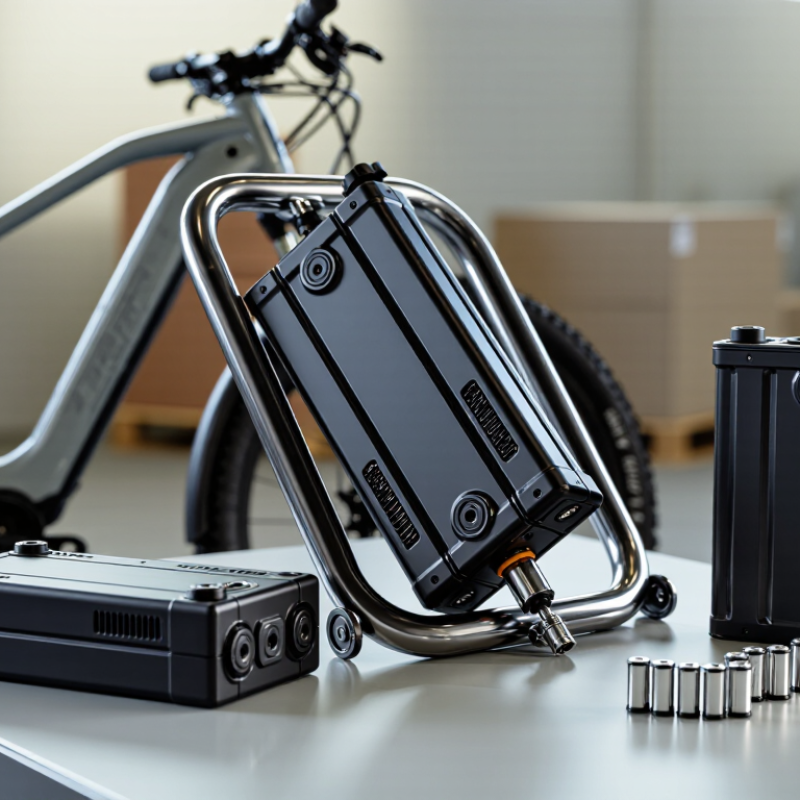
Hailong ebike batteries are removable lithium-ion power packs designed around a slide-in frame case. The housing usually mounts to the downtube, where a locking rail holds the pack during riding. Common systems use 36V or 48V electrical architecture, with capacity measured in ampere-hours or watt-hours.
A 36V, 10Ah battery stores about 360Wh under ideal conditions. Real riding distance varies with rider weight, hills, tire pressure, temperature, and assist level. The battery management system monitors cell voltage, temperature, charging, and discharge limits. It helps prevent unsafe operating conditions, but it cannot correct poor wiring or an incompatible controller.
Check the connector carefully.
Global buyers should match voltage, case dimensions, rail position, connector type, and controller limits before ordering. A battery may slide into place yet fail electrically. That mistake is surprisingly common. Ask suppliers for cell specifications, protection details, cycle-testing records, transport documentation, and clear warranty terms. Quality inspection should include charging behavior, output stability, locking strength, and visible housing damage.
Use the approved charger for the battery’s voltage. Keep the pack dry, cool, and away from direct heat. Do not open the case casually; damaged Lithium Cells can become dangerous. Storage at a moderate charge level is generally better than leaving the pack fully charged for months. Still, storage guidance differs by cell design, so supplier documentation deserves careful review. One specification sheet is never enough.
A practical, brand-neutral comparison table for evaluating Hailong-style e-bike battery products, technical specifications, compatibility, safety, and international purchasing requirements.
| Data Category | Specification or Dimension | Accurate Technical Information | What Global Buyers Should Verify |
|---|---|---|---|
| Product Definition | Hailong battery | “Hailong” generally describes a common external battery enclosure and mounting format used on many electric bicycles. It is not a battery chemistry, electrical standard, or single manufacturer specification. | Confirm the exact enclosure dimensions, mounting rail, connector, key position, communication interface, and electrical specifications rather than relying only on the word “Hailong.” |
| Battery Chemistry | Rechargeable lithium-ion | Most modern Hailong-style e-bike batteries use rechargeable lithium-ion cells. Common chemistries include nickel-manganese-cobalt-based cells and lithium iron phosphate cells, each with different energy density, weight, voltage behavior, and service characteristics. | Request the declared cell chemistry, cell manufacturer information, safety data, production traceability, and applicable test documentation. |
| Nominal Voltage | 36 V or 48 V systems | A 36 V lithium-ion pack commonly contains 10 series cell groups, while a 48 V pack commonly contains 13 series cell groups. The actual full-charge voltage is higher: approximately 42.0 V for a 36 V pack and 54.6 V for a 48 V pack when using standard lithium-ion charging parameters. | Match the battery nominal voltage with the motor controller and charger. A 36 V battery must not be charged with a 48 V charger, and vice versa. |
| Capacity | Ampere-hours (Ah) | Capacity indicates the approximate amount of electrical charge stored by the pack. Typical external e-bike battery configurations may be offered in ranges such as 10 Ah to 20 Ah, depending on cell capacity, enclosure size, and pack design. | Compare rated capacity at the stated test conditions. Ask whether the capacity is nominal, minimum guaranteed, or measured at a specific discharge rate and temperature. |
| Stored Energy | Watt-hours (Wh) | Approximate stored energy is calculated as: nominal voltage × ampere-hours. For example, a 48 V, 15 Ah pack has approximately 720 Wh of nominal energy before accounting for operating conditions and usable-energy limits. | Use watt-hours to compare products with different voltage and Ah ratings. Verify the declared rating on the battery label and shipping documents. |
| Battery Management | Battery Management System (BMS) | A BMS normally monitors cell-group voltage and pack temperature and may provide overcharge, over-discharge, over-current, short-circuit, and temperature protection. The exact functions vary by design. | Confirm continuous and peak discharge current, charging-current limits, temperature protections, balancing behavior, low-voltage cutoff, and whether communication with the controller is required. |
| Motor Compatibility | Voltage, current, and connector matching | Compatibility depends on more than physical fit. The battery must match the controller’s voltage range, current demand, connector polarity, mounting interface, and any communication protocol used by the e-bike system. | Obtain wiring diagrams, connector photographs, pin assignments, controller limits, and a complete compatibility confirmation before placing a bulk order. |
| Mounting Format | Downtube-mounted external pack | Hailong-style batteries are commonly mounted externally on the bicycle downtube using a fixed rail or base plate. The removable pack may include a lock, power switch, charge port, and battery-level indicator. | Check rail hole spacing, locking mechanism, cable exit location, clearance around the frame, mounting hardware, and resistance to vibration during riding. |
| Charging | Dedicated lithium-ion charger | The charger must have the correct output voltage, charging current, connector, polarity, and charging profile for the battery pack. Standard lithium-ion packs generally use a constant-current/constant-voltage charging process. | Confirm charger input range, output rating, plug type, regional electrical compatibility, charging indicators, and whether the charger is supplied with the battery or purchased separately. |
| Charging Time | Capacity and charger-current dependent | A simplified estimate is battery capacity in Ah divided by charger current in A, with additional time required during the constant-voltage phase. Actual time varies with battery state, temperature, charger rating, and BMS behavior. | Request a measured charging-time range and clarify whether the stated time refers to a full charge from empty or a partial recharge. |
| Operating Conditions | Temperature and moisture limits | Lithium-ion battery performance and charging safety are temperature-dependent. Charging a frozen or excessively hot battery can create safety risks. The enclosure should protect against normal road splash, but water resistance is not the same as waterproofing. | Obtain the supplier’s tested charging, discharging, storage, and humidity limits, plus the enclosure’s stated ingress-protection rating where available. |
| Service Life | Cycle-life specification | Cycle life depends on cell chemistry, depth of discharge, charging rate, temperature, storage condition, and end-of-life capacity criteria. A cycle-life claim is meaningful only when the test conditions and retained-capacity threshold are stated. | Ask for cycle-test conditions, end-of-life definition, sample size, test reports, warranty terms, and expected capacity retention under the intended use profile. |
| Safety Testing | Transport and product compliance | Lithium-ion battery shipments are commonly subject to dangerous-goods transport requirements. Depending on the destination and transport mode, buyers may need evidence such as UN 38.3 test compliance, safety test reports, and applicable regional product documentation. | Confirm current documents for the exact battery model, cell configuration, and production revision. Do not accept documents for a different pack or cell model without verification. |
| Shipping Classification | Lithium-ion battery with watt-hour rating | Shipping requirements depend on watt-hours, whether the battery is installed in equipment, packed with equipment, or shipped separately, and the selected transport method. Airline and carrier rules may impose additional restrictions. | Confirm packaging instructions, dangerous-goods declarations, labeling, approved transport route, battery state-of-charge requirements, and responsibilities for customs clearance. |
| Quality Control | Cell matching and pack assembly | Consistent cell selection, welding quality, insulation, mechanical protection, BMS configuration, and end-of-line testing are important for pack reliability and safety. | Request incoming-cell inspection records, capacity and internal-resistance matching criteria, welding inspection, insulation tests, functional tests, and serial-number traceability. |
| Procurement | Samples, customization, and warranty | Buyers may need samples before mass production to verify fit, electrical compatibility, range, charging behavior, and riding performance. Customization can include capacity, connectors, labels, rails, keys, and communication settings. | Define sample approval, minimum order quantity, production lead time, spare-parts policy, warranty coverage, failure-analysis procedure, and replacement or repair responsibilities in writing. |
| Use Cases | Urban, commuting, cargo, and recreational e-bikes | Hailong-style packs are commonly used on city bicycles, commuter e-bikes, trekking bicycles, folding bicycles with compatible frames, and some light cargo applications. | Select capacity and discharge capability according to rider weight, terrain, motor power, assistance level, weather, expected range, and cargo requirements—not appearance alone. |
| Safe Handling | Storage, inspection, and charging practice | Batteries should be kept dry, protected from impact, and stored according to the supplier’s instructions. Users should stop using a pack showing swelling, leakage, unusual odor, overheating, smoke, or physical damage. | Require user manuals and emergency procedures. Never open or modify a lithium-ion pack without qualified technical expertise and appropriate safety controls. |
Buyer note: Technical values, certifications, transport rules, and compatibility details must be confirmed for the exact battery model and destination market. A Hailong-style enclosure alone does not guarantee electrical or mechanical compatibility.
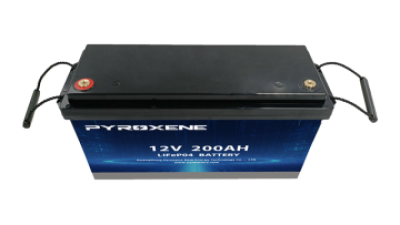
A 12V 200Ah LiFePO4 battery provides approximately 2.56 kWh of nominal energy, making it a practical option for residential energy storage. It can store electricity generated by solar panels or supplied during off-peak hours, then power lighting, communication equipment, refrigerators, monitoring systems, and other essential loads. Compared with traditional lead-acid batteries, lithium iron phosphate chemistry offers a longer service life, stable performance, lower maintenance requirements, and a higher usable capacity. A built-in battery management system can help monitor voltage, temperature, charging, and discharging conditions, while suitable chargers and inverters should be selected according to the system design.
In industrial applications, this battery can support backup power, mobile workstations, security equipment, telecommunications systems, and small renewable-energy installations. Multiple units may be connected in parallel or series when a larger capacity or higher system voltage is required, provided that the configuration follows the manufacturer’s technical specifications. Its compact 12V format allows flexible installation in cabinets, equipment rooms, recreational systems, and remote facilities. For reliable operation, users should install the battery in a dry, ventilated location, protect it from extreme temperatures, use compatible electrical protection devices, and regularly inspect terminals, cables, and monitoring data.
Compare usable energy, not only advertised capacity. A 48V, 15Ah battery stores about 720Wh under laboratory conditions. Actual range will be shorter. Rider weight, hills, tire pressure, temperature, and assist level change performance.
Lithium-ion cells with stable thermal performance are commonly preferred. Ask for cycle-life testing conditions, not just a large cycle number. Different tests produce different results. That detail deserves scrutiny.
It should protect against overcharge, over-discharge, overcurrent, and excessive temperature. Basic protection may not be enough. Request documented protection settings and failure-handling procedures. Do not rely on a brochure alone.
Check connector type, mounting dimensions, rail locks, charging ports, and casing seams. Mount a sample on a real bicycle. Ride over rough pavement and watch for movement, heat, or sudden power loss. Small defects matter.
Request capacity reports measured under a defined load. Compare results from several production batches. Independent testing can reveal optimistic ratings. One perfect sample proves little.
Look for controlled assembly areas, calibrated testers, and traceable cell batches. Ask how workers verify insulation, weld strength, connector alignment, and enclosure fit. Dated production records are more useful than polished photographs. Photos can mislead.
An IP rating indicates resistance to dust and water under specific conditions. It does not guarantee safe immersion. Request laboratory reports for capacity, vibration, moisture, and protection tests. Check test dates and acceptance criteria.
Ask about serial-number tracking, warranty handling, replacement parts, and recall communication. Shipping documents and regional compliance files should be clear. Response speed matters when a battery reaches a service center. Promises can change.
Compare cells, electronics, housing, testing, documentation, and warranty support. A low price may hide weaker records or limited service. Check whether the same quality process applies to every shipment. Uncertainty remains.
This guide explains what a Hailong Ebike Battery is, how it powers electric bicycles, and which factors global buyers should evaluate before placing an order. It compares essential specifications such as voltage, capacity, battery chemistry, range, dimensions, connector type, mounting style, charging time, and cycle life. It also presents practical criteria for identifying reliable suppliers in 2026, including production capabilities, material traceability, testing procedures, quality control systems, and consistent batch performance.
Buyers will also learn how to confirm compatibility with their ebike, charger, motor, and controller while reviewing safety features and applicable international certifications. The guide discusses pricing considerations, minimum order quantities, customization options, packaging, lead times, customs documentation, and international shipping conditions. By considering technical performance, supplier reliability, regulatory compliance, and total purchasing costs together, importers and distributors can select a suitable Hailong Ebike Battery solution with greater confidence and reduce avoidable purchasing and logistics risks.