

News


How to Choose the Best Lithium Battery for Floor Cleaning Machines?
2026-09-04
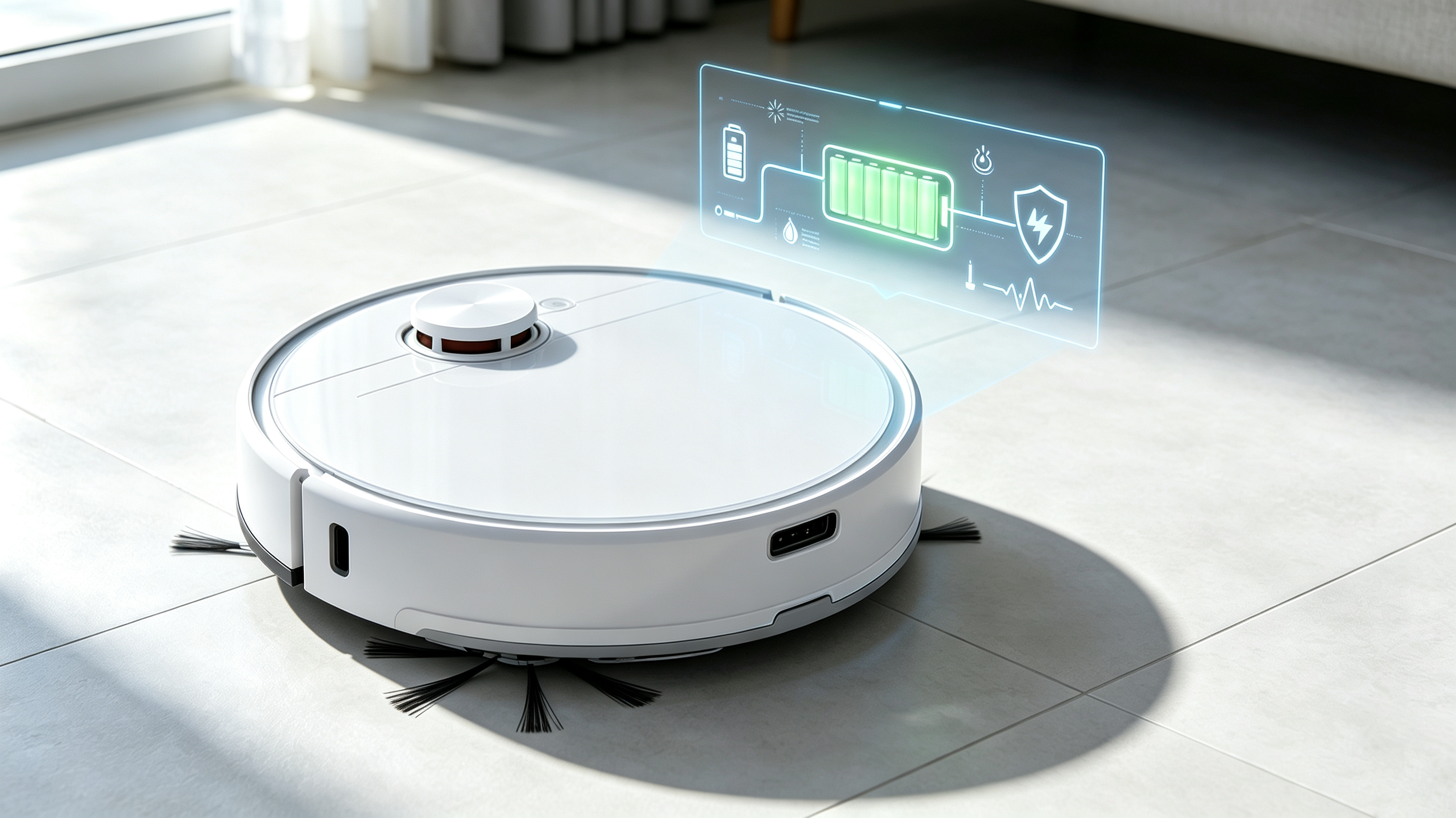
As all-in-one sweeping and Floor Mopping Robots gain popularity in residential and light commercial settings, the Lithium Battery—as the core power source of the entire machine—directly determines device runtime, power delivery, and overall reliability. Selecting the right battery enhances the robot's cleaning range, efficiency, and long-term service life.
1. What Is a Floor Cleaning Machines Lithium Battery?
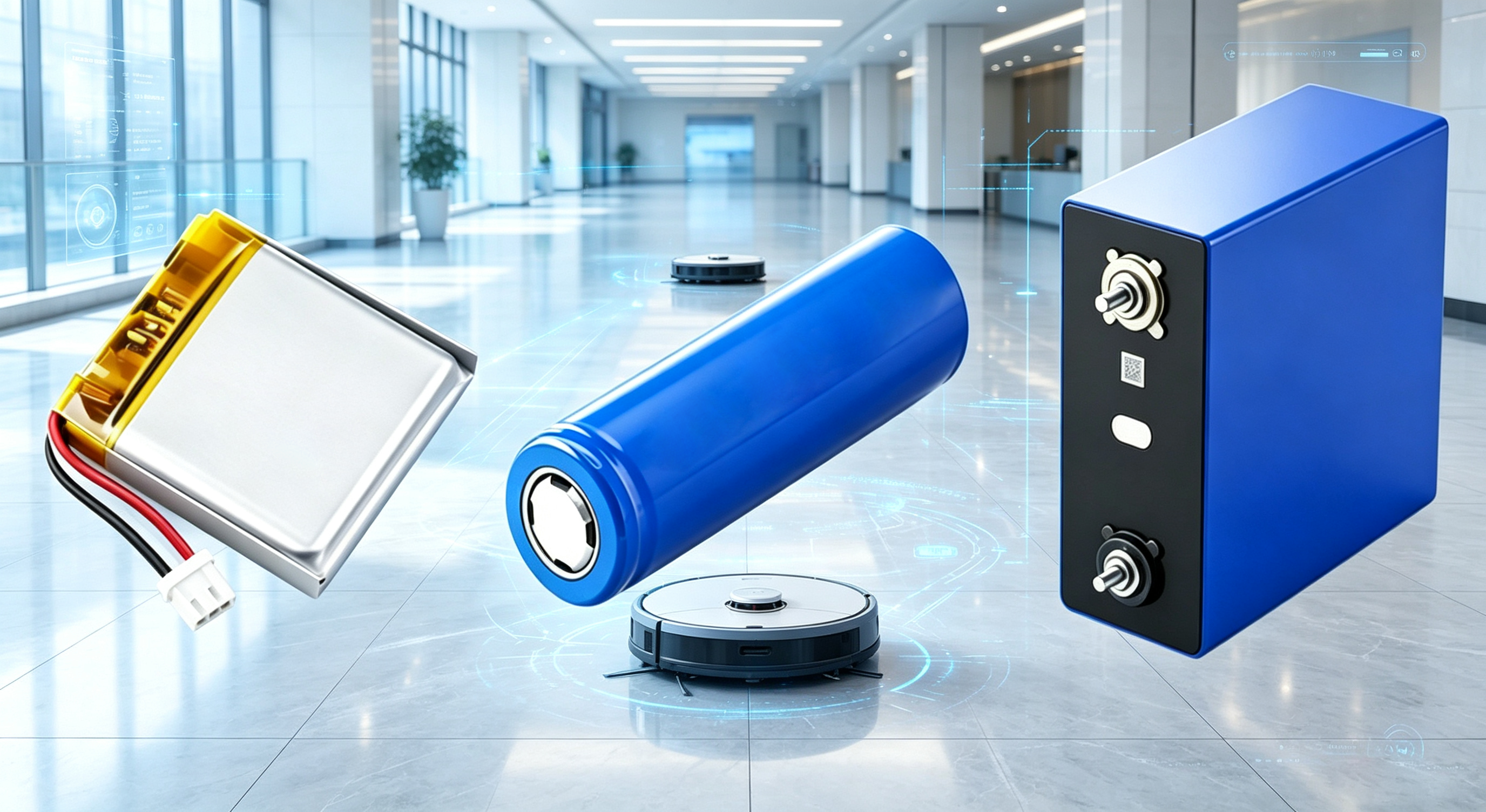
A Floor Cleaning Machines lithium battery is a rechargeable lithium-ion Battery Pack designed to power smart cleaning devices. The mainstream configuration adopts ternary lithium cells (18650/21700) or lithium-polymer (LiPo) cells, with some commercial models using lithium iron phosphate (LiFePO₄) cells, paired with a dedicated Battery Management System (BMS). The battery must satisfy multiple load demands including drive motors, mopping modules, water pump pressurization, and sensor power supply, while also meeting safety certifications such as IEC 62133, UN 38.3, CE, and RoHS.
2. The Importance of Choosing Suitable Lithium Batteries
Runtime Directly Determines Cleaning Area
Substandard batteries often have inflated capacity ratings. Insufficient capacity or low discharge efficiency forces mid-cycle recharging, degrading the user experience.
Substandard batteries often have inflated capacity ratings. Insufficient capacity or low discharge efficiency forces mid-cycle recharging, degrading the user experience.
Ensures Stable Device Power
Water pump and fan startup in Floor Cleaning Machines generates instantaneous peak current. Excessive internal resistance or inadequate discharge capability causes voltage sag, system crashes, and sensor malfunction.
Water pump and fan startup in Floor Cleaning Machines generates instantaneous peak current. Excessive internal resistance or inadequate discharge capability causes voltage sag, system crashes, and sensor malfunction.
Eliminates Safety Hazards
The machine's internal environment involves moisture and continuous vibration. Non-compliant batteries are prone to overheating and swelling, creating fire safety risks.
The machine's internal environment involves moisture and continuous vibration. Non-compliant batteries are prone to overheating and swelling, creating fire safety risks.
Service Life Determines Replacement Cost
High-quality batteries deliver cycle life exceeding 800 cycles, reducing replacement frequency and lowering long-term operating costs.
High-quality batteries deliver cycle life exceeding 800 cycles, reducing replacement frequency and lowering long-term operating costs.
3. How to Select the Right Battery for Your Floor Cleaning Machines?
Match the Application Scenario
For consumer-grade residential Floor Cleaning Machines, prioritize ternary lithium or LiPo batteries—high energy density, compact size, fitting tight internal compartments. For large commercial Floor Cleaning Machines, prioritize LiFePO₄ batteries, valuing long cycle life and high safety performance. Strictly match the machine's rated voltage.
For consumer-grade residential Floor Cleaning Machines, prioritize ternary lithium or LiPo batteries—high energy density, compact size, fitting tight internal compartments. For large commercial Floor Cleaning Machines, prioritize LiFePO₄ batteries, valuing long cycle life and high safety performance. Strictly match the machine's rated voltage.
Match Capacity and Discharge Rate
Small-space devices: 3,000–4,000 mAh; large-space devices: 5,000–6,000 mAh. Must support 2C–3C peak discharge capability to handle simultaneous high-current demands from roller brushes and water pumps, preventing insufficient power output.
Small-space devices: 3,000–4,000 mAh; large-space devices: 5,000–6,000 mAh. Must support 2C–3C peak discharge capability to handle simultaneous high-current demands from roller brushes and water pumps, preventing insufficient power output.
Evaluate the BMS
The BMS must provide complete overcharge, over-discharge, overcurrent, short-circuit, and temperature protection; support robot sleep mode and auto-recharge logic; maintain low voltage output ripple to avoid sensor signal interference; and feature cell balancing functionality to delay pack-level consistency degradation.
The BMS must provide complete overcharge, over-discharge, overcurrent, short-circuit, and temperature protection; support robot sleep mode and auto-recharge logic; maintain low voltage output ripple to avoid sensor signal interference; and feature cell balancing functionality to delay pack-level consistency degradation.
Environmental Adaptability and Compliance Certification
Must feature anti-vibration and basic splash-resistant construction; pass IEC 62133, UN 38.3, CE, and other certifications; deliver cycle life ≥800 cycles with 80% capacity retention, adapting to complex daily household operating conditions.
Must feature anti-vibration and basic splash-resistant construction; pass IEC 62133, UN 38.3, CE, and other certifications; deliver cycle life ≥800 cycles with 80% capacity retention, adapting to complex daily household operating conditions.
4. Conclusion
Mopping robot battery selection cannot single-mindedly pursue maximum capacity. It requires comprehensive evaluation of cell chemistry, discharge rate, BMS protection scheme, environmental protection, and compliance certification. A well-matched battery not only ensures complete cleaning runtime and instantaneous power delivery but also withstands complex conditions such as vibration and moisture—reducing safety hazards from swelling and overheating.
Whether for new product R&D procurement or later-stage spare part replacement, prioritizing fully tested, compliant batteries is essential to ensure stable robot operation and reduce equipment failures and maintenance costs.